MARINE ECOLOGY
  • Home
  • Blog
  • Research
    • Microplastics
    • Oyster Mortality
    • Tipping Points
  • CV and Publications
  • Contact Me

BLOG

New posts weekly!

Your Questions Answered

11/16/2023

0 Comments

 
Picture
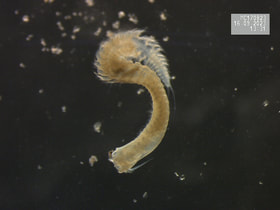
For this week, I want to spend time answer a few questions I've received recently about my research, what the role of PhD candidate is like after they graduate from their program, and what happens in research when things don't go as planned. So while this week's photo will feature a cool animal from this week's efforts, not all of these topics are related to what I accomplished in the lab.

The first question I was recently asked is, "What is a postdoc, and why do you need to complete one?" A postdoc, short for postdoctoral [position], is an employment opportunity that often serves as the transition between completing a PhD and getting a faculty position at a university. Postdocs may be required in any academic field, but graduates in the natural sciences and cognitive sciences are the majority of postdoctoral scholars. While universities and hiring committees might have their own reasons for wanting applicants with postdoctoral experience, some of the common reasons include: (1) new PhDs need to gain more research experience before they start their own lab; (2) an interest in the PhD's demonstrated responsibility for large(r) sums of money; and (3) new PhDs need more first-author publications to be competitive for faculty positions. With the apparent emphasis on the value of postdoctoral experience, hopefully comes an emphasis on postdoctoral opportunities to facilitate success; unfortunately, postdoctoral funding comes from three major sources (faculty-funded opportunities, university-funded opportunities, governmental or ngo fellowship opportunities), and is a limiting factor. Finally, as postdocs are transition and growth periods, fellows are not hard committing to a specific timeline. Here I mean that even if a postdoc fellow has secured a 2-year fellowship, the individual may get hired in the first year to a faculty (or other) position, and end their fellowship early. 

The second question I was recently asked is, "What happens in your research when you don't know how to complete a task or the task is outside of your expertise?" For some (and maybe many) PhD students, the projects we develop and questions we want to answer are at the very edge of our comfort zones. For my own work, I had some basic marine science skills from my undergraduate work, but I had never worked on marine sediments, meiofauna, or microplastics, and I had never conducted experimental manipulations in the lab. Often our first step in tackling these research projects and tasks is reading primary literature, textbooks, and manuals, since we have documentation from so many experts before us who have tried and developed skills throughout their experience that is likely helpful in our own works. Notably, the reading doesn't stop, because we often are picking up new papers or hearing about new research that may present new ideas or alternate ways of completing our research tasks. Additionally, if possible, I try to test out the methods using samples I'm not using for my studies. The nice thing about sediment coring is that you can take practice cores where you are as long as you have the proper permits, and practicing coring skills was the first task I had when I got to FSU. Sometimes, the best method is to collaborate with the experts themselves. Besides my advisor and co-advisor, I have four great marine scientists on my PhD committee who are available to talk when I need to iron out ideas and research plans, and I can leverage connections through this team to get feedback from international researchers, especially helpful since microplastics work in the U.S. is limited.

Finally, I want to close with the third question I was recently asked, which is, "What happens when things don't go as planned with research?" This happens quite a lot, whether it's a case of poor weather or boating conditions, difficulties with gear in the field, problems in the lab during or after a study, etc. I honestly think that poor weather/boating conditions and difficulties with field gear have been most of the problems I've had in my research, and both are quite frustrating. For poor weather/boating conditions, I have to reschedule with my team, which isn't ideal, but it is better to be safe than for us to try and sample under poor conditions. If we have difficulties with gear in the field, I make executive decisions on how to handle the issue and then record in my field book what happened and how we solved the problem, if necessary. A few instances our sediment core tubes have gotten stuck on the coring device, which I solved by dumping all the sediment out, using the slide weight to help remove the tube, and then I put that tube aside to never use again on the trip. This did mean dumping out a full sampling replicate and conducting an additional sampling effort, but the end result was sediment that was free from physical disturbances caused by removing the stuck tube. Problems in the lab during or after a study can be challenging because the magnitude of the problem drives the solution. If it is a situation where the power flickers and the system loses power for a brief minute (like it did in my recent work), that is a much easier situation to handle than losing the power overnight and materials thawing in a research freezer, which has happened to others. My stance on problems during or after studies is to document everything that happened with as much detail as possible, include statements regarding such anomalies in the reporting of the research, and possibly analyzing the results through two lenses--one where nothing happened or where the anomaly had no effect and one where the anomaly had an affect consistent across the study system.

Thanks to everyone who sent in questions or asked questions about my work that I could feature this week. Next week I will be continuing work in the lab on measuring macrofauna biomasses and identifying the macrofauna in my sediment samples, including the polychaete pictured above. Stay tuned. 

0 Comments


Leave a Reply.

    Categories

    All

    RSS Feed

Powered by Create your own unique website with customizable templates.
Photos from unukorno, Grace Courbis
  • Home
  • Blog
  • Research
    • Microplastics
    • Oyster Mortality
    • Tipping Points
  • CV and Publications
  • Contact Me