MARINE ECOLOGY
  • Home
  • Blog
  • Research
    • Microplastics
    • Oyster Mortality
    • Tipping Points
  • CV and Publications
  • Contact Me

BLOG

New posts weekly!

The Numbers are In

12/1/2023

0 Comments

 
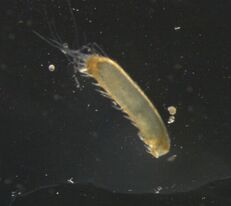
PictureFig. 1. An unknown macrofauna individual from one of the sediment communities. It has apparent tentacles and possibly hair-like structures, and an unsegmented body.
This week at the lab I finished collecting all biomass data and identified, when possible, all macrofauna individuals from the mesocosm experiment, which means I have all the data for this project. There were some animals I could not identify, so I have pictures of each animal, and I have assigned it a unique identifier code so that any individual that is the same animal gets grouped accordingly. I will also write notes about these unidentified individuals in my data sheet so that scientists who request the raw data for the work have access to this extra information.

So what's next then? I have the raw data for all the measurements from the experiment but I need to finish a few items before I can start analyzing the data. For one, I have blotted wet weight measurements for the macrofauna, and I need to convert these to dry biomass measurements. There are wonderful tools to help me in this process, so I will be using these tools to finish the biomass portion. Additionally, I need to calculate one more metric for all the data before I can evaluate the data. The bioturbation potential or community bioturbation potential, which qualifies how active fauna communities are or can be in sediments, is based on the number of animals, the types of animals, and their biomasses, hence why I need to finish the biomass data. I will also use information about the types of animals as a potential explanatory factor, because the diversity of sediment communities may be important for bioturbation or oxygen penetration.

The last step, then, is to look at and analyze the data. I like this part of research because it is a story-telling process, of course based on mathematics and science, but the scientist shapes a narrative about the data and why they believe certain events happened. To tell this story, I will generate figures (graphs), tables, and statistics to help my narrative and to visualize what happened in this experiment. This process, though, can be somewhat lengthy. Especially with a lot of data and multiple variables in an experiment, it takes time to ascertain what factors lead to measured effects and then to explain why the relationships between some of the variables exist or lead to the results in the experiment.

So here's to the next few weeks of working through the numbers, making figures (one of my favorite parts of science), and telling the story of what happens in sediment communities when microplastics are introduced. Stay tuned!

0 Comments


Leave a Reply.

    Categories

    All

    RSS Feed

Powered by Create your own unique website with customizable templates.
Photos from unukorno, Grace Courbis
  • Home
  • Blog
  • Research
    • Microplastics
    • Oyster Mortality
    • Tipping Points
  • CV and Publications
  • Contact Me