MARINE ECOLOGY
  • Home
  • Blog
  • Research
    • Microplastics
    • Oyster Mortality
    • Tipping Points
  • CV and Publications
  • Contact Me

BLOG

New posts weekly!

The Clicky Clacky Stage

10/19/2023

0 Comments

 
Picture
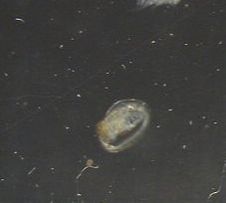
This week in the lab I have been making microscope slides and taking more pictures to complete the biomass measurements for the meiofauna. I've resorted to calling the biomass process 'clicky clacky' as I have to click the mouse so many times to complete one measurement I'm afraid that my office mates are losing their patience. Why so many clicks? The ImageJ program has multiple methods for measuring photographs. The two most common methods are using a straight line tool and a segmented line tool, which as its name suggests, is used to measure items not in a single straight line. Since many nematodes exist in non-linear shapes, and nearly all copepods have segmented shapes, I have to click multiple times to connect line segments from their heads to tails. Additionally, ImageJ keeps track of all measurements I take in a small side window, however it assumes that each measurement is from a separate animal, so all the measurements regardless of length or width, are stored in one column. Therefore, when I import the measurements into Excel, I need to extract the width measurements, make them their own column, and then align them with the associated length measurements; again, more clicking. I am pleased to note, however, that today I finished slides for sample 24 out of 32. Between today and Tuesday--my next day at the lab--I will complete 12 samples of biomass measurements to catch up to my slide making. This means that next week will likely be my last week of slides and meiofauna biomass. I still have a few animals that I have to identify, as they are taxa I'm not familiar with, and a few copepods I have to look at under the microscope and compare their shapes with reference material (there are 8 copepod shapes which each require different conversion factors). Once this process is done, I'm one step closer to finishing this research. My interim step will be converting all of the biovolume measurements to biomass measurements using the formulas and conversions I talked about in last week's blog. Then I can move on to the macrofauna, which will be an easier biomass process, though a more difficult identification process, since we don't work with macrofauna in our lab and we don't identify them. Maybe Google reverse image search will have some ideas. 

0 Comments


Leave a Reply.

    Categories

    All

    RSS Feed

Powered by Create your own unique website with customizable templates.
Photos from unukorno, Grace Courbis
  • Home
  • Blog
  • Research
    • Microplastics
    • Oyster Mortality
    • Tipping Points
  • CV and Publications
  • Contact Me