MARINE ECOLOGY
  • Home
  • Blog
  • Research
    • Microplastics
    • Oyster Mortality
    • Tipping Points
  • CV and Publications
  • Contact Me

BLOG

New posts weekly!

A Fast Week and Faster Day

2/15/2024

0 Comments

 
Picture
This week flew by, and before I knew it, it was Thursday and time for another blog. This week has featured two items: preparing for the Ocean Sciences Conference and getting my students ready for their project proposals. On Monday I learned that the department's poster printer broke, and had actually been out of commission for a while. It turns out that they don't make parts for the printer anymore, so the department is apparently working on procuring a new printer. Unfortunately, procurements take time, especially with a poster printer; these printers are designed to print high quality, glossy posters for presentations, usually 36"x48" pieces. Printing takes between 30-45 minutes, but produces a really nice finished product. As a backup, I planned to use the printing service offered by the conference (that I would have to pay for) but I found an additional poster printer for our departmental use and got my poster situation fixed by Tuesday evening. I even remembered that we had some extra poster rolls in my office, which helps protect the poster in transport and if it rains on the day I need to get the poster to the conference center.

In class this week, the students started setting up pilot experiments for their projects and they started honing in on the specific question they wanted to address with their research. They will present a project proposal to us in a few weeks and then they will have a few additional weeks to start their project and collect their data. Therefore, today was a lot of problem solving tasks because while the students have really big ideas, sometimes these ideas are detrimental to the success of their projects or to the health of the animals they want to work with. In fact, one student found a published paper that used really extreme salinity levels that were most likely quite harmful to the study organisms. Luckily we talked through how they could conduct a study using similar methods but create more realistic salinity levels and less extreme upper limits. What I really enjoyed this week was asking students questions about their plans and getting to see them think through some of the potential experimental design problems they created. My hope, as is the hope of the professor and other TA, is that the students will keep their experimental design as simple as possible and conduct tidy science--science where the amount of treatment groups are limited but that there's sufficient replication and smart experimental design to account for confounding variables. I can't wait to see what the students start working on in a few weeks.

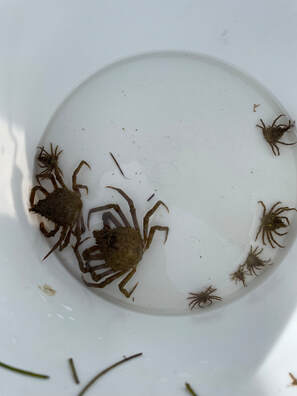
Next week there will not be a blog, as I will be in the middle of the conference on Thursday and driving back to Florida on Friday. Stay tuned the week after for a special blog on what it means to defend a dissertation and what that process looks like from the candidate's perspective and from an audience member perspective. This week's picture is brought to you by our wonderful crabs at the marine lab that my students are really enjoying finding around and trying to research.

0 Comments


Leave a Reply.

    Categories

    All

    RSS Feed

Powered by Create your own unique website with customizable templates.
Photos from unukorno, Grace Courbis
  • Home
  • Blog
  • Research
    • Microplastics
    • Oyster Mortality
    • Tipping Points
  • CV and Publications
  • Contact Me